 Listen to Our Blogs

Moving to Indianapolis for Work? The Ultimate Relocation Roadmap
September 7, 2023
 October 1, 2025

Flexible offices, once considered a niche solution for startups and small businesses, are now being adopted by some of the world’s largest and most influential brands. According to recent industry reports, approximately 55% of global occupiers currently utilize flexible workspace solutions, with an additional 17% planning to follow suit in the near future. This adoption reflects a strategic shift in how commercial real estate is viewed. Instead of treating their office space as a fixed asset, they now view it as a flexible resource that can adapt to their evolving needs. This article examines the key forces driving the shift away from traditional corporate leases, including developing workforce expectations, the rise of hybrid work arrangements, economic uncertainty, technological advancements, globalization, and sustainability concerns. It also examines the limitations of long-term leases. It highlights how flexible offices offer agility, cost efficiency, and a better employee experience, making them a strategic necessity for modern companies.
Driving Forces Behind the Shift
A range of structural forces is prompting companies to move beyond the rigidity of conventional leases. From employee expectations to global expansion needs, these drivers are redefining the role of the office in today’s business environment. Below are the key forces fueling this transformation and shaping the future of work:
Evolving Employee Preferences and the Rise of Hybrid Work
One of the significant changes triggered by the COVID pandemic is the widespread adoption of hybrid work models, reshaping employee expectations worldwide. Even in its aftermath, many workers continue to favor flexible arrangements over the traditional 9-to-5 office routine. Surveys indicate that more than 60% of employees prefer a hybrid working space, which involves splitting their time between home and the office to balance flexibility with in-person collaboration. To meet these expectations, companies are shifting away from long-term, inflexible leases and opting instead for solutions that can adapt to evolving workforce needs.
Economic and Market Uncertainties
The global economy has become increasingly volatile due to inflation, war, shifting interest rates, and rapid market fluctuations. In response to this unpredictability, many companies are rethinking their commitments before entering into long-term agreements, as they may lead to financial risks in the future.
Technological Enablers Making Flexible Workspaces Viable
Technology is advancing at an unprecedented pace, transforming how and where work gets done. Cloud computing, intelligent office systems, digital collaboration platforms, and secure connectivity have eliminated the need for employees to be tied to a single location. These tools allow seamless collaboration across remote and on-site teams, making distributed work not only possible but efficient. As a result, technology has become a key driver of the shift toward more flexible and adaptable workspace models.
Globalization and the Need for Cross-Border Agility
As multinational companies expand into new markets, speed and flexibility are critical. Traditional leases often involve lengthy negotiations, significant upfront costs, and long-term commitments that can slow down market entry. In contrast, flexible office solutions offer a faster, lower-risk alternative, providing immediate access to workspace with minimal financial burden.
ESG and Sustainability Priorities
Sustainability has become a central priority for global corporations, influencing how they design and manage workplaces. Traditional offices often waste space and consume excessive energy, resulting in a larger environmental footprint. Flexible working spaces, by contrast, optimize resources and reduce waste, making them a natural fit for industries advancing their ESG commitments.
Risk Management and Agility
Traditional long-term leases lock companies into financial commitments that may not align with shifting workforce needs or market conditions. To reduce exposure and preserve capital, global companies are increasingly turning to flexible office solutions that allow them to pivot quickly and adapt to change.
The Weaknesses of Traditional Corporate Leases
Traditional office leases were built for an era of predictability and stability. In today’s fast-changing environment, where agility is essential and markets shift rapidly, these long-term commitments often become liabilities. Companies now face several recurring challenges with conventional leases:
High Cost: Traditional leases often come with significant expenses beyond rent, including ergonomic furniture, utilities, maintenance, and ongoing upkeep. Rent escalation clauses can add further financial strain over time, particularly during long-term leases. Without options to scale back or exit early, businesses may find themselves paying for space they no longer need or cannot afford during challenging financial periods.
Long Lease Terms: Traditional leases demand a level of certainty that most businesses can’t guarantee in today’s shifting market environment. These agreements often span 10 to 15 years, locking companies into commitments that may not align with future needs. As organizations expand, downsize, or restructure, such rigid terms leave little room to adapt.
Lack of Flexibility and Adaptability: Traditional office leases offer little flexibility to adjust to changing business conditions. Due to long-term commitments, companies cannot easily scale their space up during periods of growth or scale down during downturns, leaving them misaligned with market realities.
Operational Inefficiencies: Traditional leases place the burden of managing the entire workspace on the company, encompassing maintenance and cleaning, utilities, and vendor coordination. This constant attention to facilities can consume time and resources, distracting leadership and staff from focusing on strategic growth.
Why Global Companies Are Embracing Flex Offices
Flexible office spaces have emerged as a strategic response to the limitations of long-term corporate leases. These spaces provide the agility to adapt quickly, manage costs efficiently, and meet the evolving expectations of today’s workforce. For global enterprises, this model not only ensures continuity but also strengthens their ability to thrive in unpredictable markets, making it a compelling alternative to traditional leases. The benefits of flexible offices highlight why global companies are making this transition. The following are some of the key benefits discussed below.
Support Remote and Hybrid Work Models
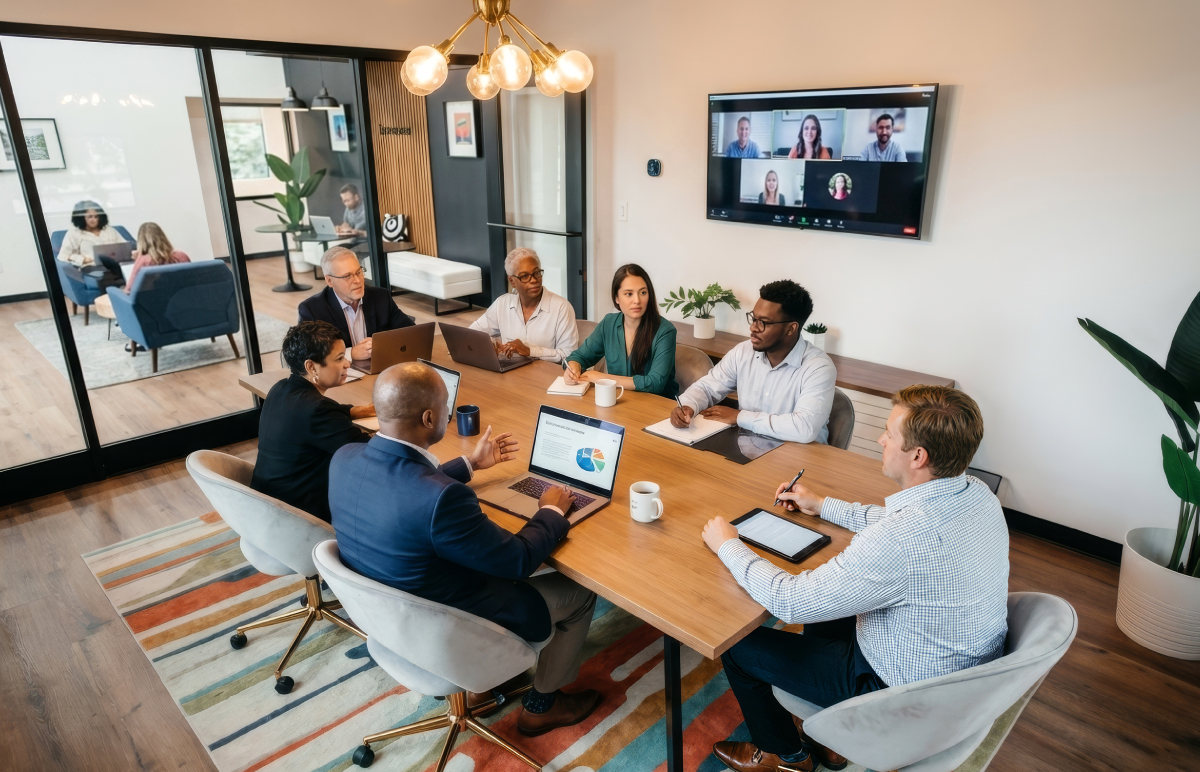
With remote and hybrid working spaces now shaping modern work structures, companies need office solutions that align with this new reality. In a hybrid setup, employees divide their time between home and office, which requires spaces that can support both in-person and remote work. Flex offices provide the professional setting employees need when in-person presence is required, while still supporting the freedom of remote work. Equipped with modern infrastructure, meeting rooms, and digital collaboration tools, these spaces facilitate seamless connections with colleagues, whether they’re across the table or across the globe. By aligning with how employees actually work today, flexible offices enhance both productivity and satisfaction.
Scalability
Unlike traditional corporate leases, which bind companies to rigid long-term commitments with little room for scalability, flexible offices offer companies the ability to grow or shrink in response to changing needs. Whether entering new markets, setting up short-term project teams, or scaling back during economic uncertainty, enterprises can adjust their space without the burden of rigid agreements. By transforming real estate from a fixed liability into a dynamic resource, flexible offices align space usage directly with business strategy.
Cost Efficiency and Reduced Risk
Instead of heavy upfront expenses for furniture, build-outs, and utilities, companies gain access to modern office cubicles with services included, allowing companies to pay only for the space and services they use. This model not only preserves capital but also minimizes long-term financial exposure by eliminating rent escalations and rigid commitments. In times of economic uncertainty, businesses can right-size their space in real time by cutting costs when demand is low and expanding only when needed. This scalability reduces both operational costs and risk.
Faster Market Entry and Out-of-State Expansion
Flexible offices allow global businesses to establish their presence in a new market more quickly by providing immediate access to professional, fully serviced spaces. While traditional office leases often slow down expansion due to lengthy negotiations, large up-front deposits, and extensive setup required before operations begin, flexible offices eliminate these barriers by providing plug-and-play environments that are immediately available. This allows businesses to move quickly, whether entering a new city like Indianapolis, opening a satellite office, or launching a regional hub, while minimizing risk and upfront costs.
Simplified Operations and Reduced Administrative Time
Running a traditional office often requires handling a wide range of tasks, including furnishing, setting up IT servers, managing utilities, coordinating with multiple vendors, overseeing maintenance, and providing mail services across various locations. These responsibilities demand significant time and resources from company leaders and support teams. Flexible offices remove much of this burden by providing centralized support, consolidated billing, built-in maintenance, and streamlined contract management. This enables businesses to simplify administrative processes and concentrate more on their core operations.
Business Continuity In Crisis Scenarios
Flexible offices enable corporations to maintain operations and minimize disruption during crises such as pandemics, natural disasters, or sudden market shifts. Their short-term leases, geographically dispersed locations, and virtual services allow companies to relocate teams quickly, adjust space requirements, or support remote work as circumstances demand. This flexibility ensures continuity of critical functions without the financial burden and delays associated with traditional long-term leases.
Enhanced Employee Experience
Flexible offices are thoughtfully designed to enhance employee experience. From modern office cubicles to communal lounges, wellness programs, and networking events, these initiatives build community and foster a sense of belonging. As a result, companies benefit from a happier, healthier workforce, stronger retention, and the ability to attract top talent seeking dynamic, people-focused workplaces.
Conclusion
The modern workplace is being redefined by the rise of hybrid and remote work, shifting employee expectations, digital transformation, and economic uncertainty. Businesses today are moving away from rigid, long-term leases in favor of more flexible options. Agility has become a top priority, and as a result, the traditional corporate lease, which once symbolized stability, is now being reconsidered across industries. As the modern workplace continues to evolve, agility has become essential for staying competitive. Global brands are shifting away from the rigidity of long-term leases and embracing flexible office solutions that enable them to adapt quickly to evolving employee needs, market dynamics, and expansion goals. Organizations that adopt this model today are better equipped to navigate uncertainty, scale with ease, and attract top talent. Flexible offices are becoming a cornerstone of future-ready business strategy. Reach out to Brandnook, a coworking and private office space provider, to explore the right flexible office solution for your company.