 Listen to Our Blogs

Moving to Indianapolis for Work? The Ultimate Relocation Roadmap
September 7, 2023
 February 5, 2026
For scaling businesses in 2026, workspace decisions must be closely tied to the growth strategy. Coworking spaces, now totaling more than 42,000 locations worldwide and representing a nearly $30 billion market, continue to provide a flexible entry point for startups and early-stage teams. These environments reduce overhead while enabling collaboration and speed. As companies grow, however, shared open layouts can begin to limit focus, privacy, and brand identity. Private office suites have become the preferred next step, capturing approximately 44.6 percent of the coworking space market. They offer enclosed space, predictable costs, and access to shared amenities, making them an effective bridge between flexibility and permanence. This article outlines a clear growth pathway from coworking environments to private suites and, ultimately, to traditional office leases, highlighting indicators of readiness, the preparation required to lease with confidence, and the practical steps that support a smooth, strategic transition.
Flexible Coworking Space: The Launchpad
Coworking has emerged as an effective launchpad for companies seeking flexibility and cost efficiency to support early-stage innovation and growth. These shared working spaces eliminate the burden of long-term lease commitments and high overhead, allowing businesses to establish a professional presence quickly and scale as needs change. Membership-based pricing simplifies budgeting, preserves cash flow, and removes many of the capital expenses typically associated with traditional office space.
Coworking extends beyond startups, offering a flexible workspace solution for companies seeking a physical presence. Remote teams can anchor their operations, and expanding businesses can test new markets without long-term commitments. With fully built-out infrastructure, including reliable connectivity, meeting spaces, front-desk support, and shared amenities, teams can remain focused on growth initiatives rather than managing space. Beyond cost and convenience, coworking environments foster organic networking among entrepreneurs, freelancers, and established firms. Proximity to other professionals creates opportunities for informal interaction, idea exchange, and strategic partnerships that can accelerate growth. Community programming, such as fundraising events, workshops, and mentorship initiatives, further strengthens professional connections and supports resilience during periods of uncertainty.
Private Office Suites: The Strategic Middle Ground Before a Long-Term Lease
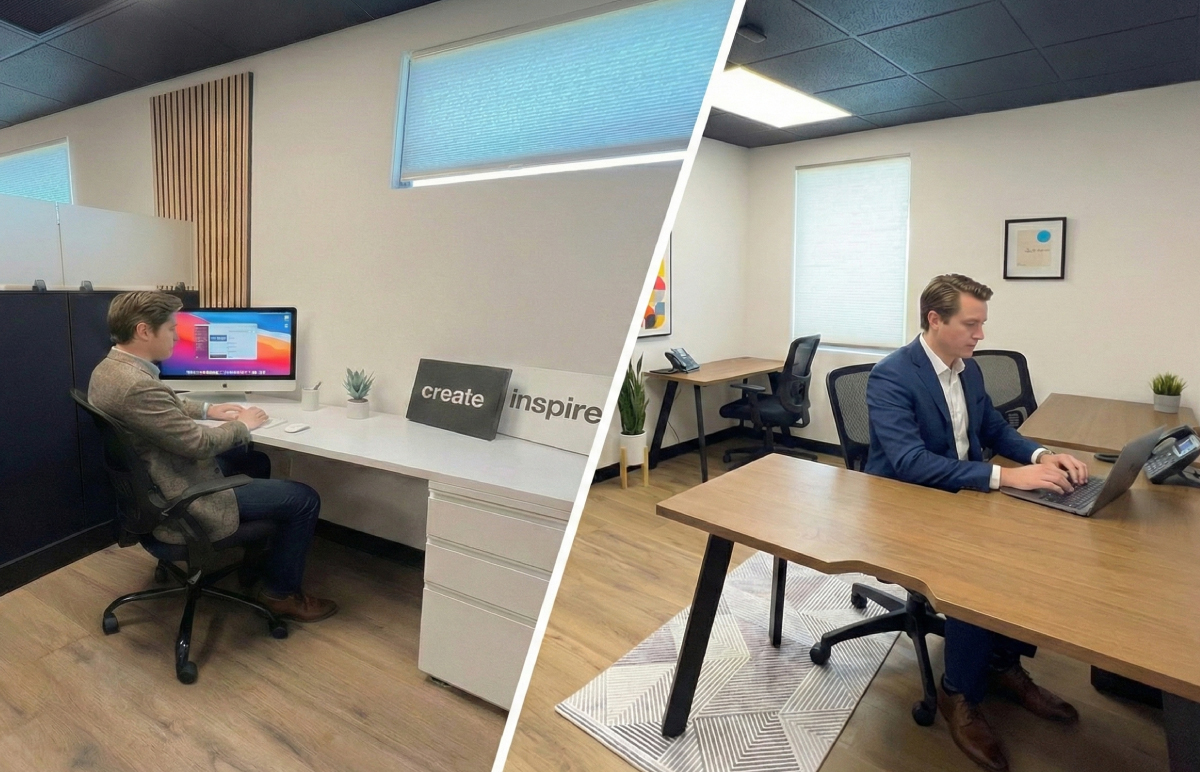
As organizations scale and team structures become more defined, private suites within coworking environments offer a natural next step. These spaces combine the privacy of enclosed offices with the convenience of shared infrastructure, providing a more structured setting without sacrificing flexibility. Dedicated office desks support focus, confidentiality, and day-to-day consistency while maintaining access to standard amenities, making them well-suited for growing teams that require greater stability but are not yet ready for a traditional lease.
Private suites also enable businesses to take greater control of their workspace. Dedicated layouts allow teams to establish clearer workflows, while light branding and consistent environments help reinforce company identity and internal culture. At the same time, many of the advantages that initially drew companies to coworking remain in place. Shared conference rooms, reception services, communal lounges, and on-site support continue to reduce operational overhead.
Cost predictability is another key advantage at this stage. All-inclusive pricing models often bundle utilities, cleaning, and IT services into a single monthly rate, simplifying expense management and improving budget accuracy. Flexible terms, such as month-to-month or short-term agreements, allow companies to plan while retaining the ability to adjust as growth continues. As teams experience greater continuity and ownership of space, private suites often reduce turnover and disruption compared to open coworking environments, making them an effective bridge between early flexibility and long-term occupancy.
Key Indicators That Signal Readiness for a Traditional Office Lease
For growing businesses, at a particular stage, workspace priorities evolve from short-term flexibility to sustained control and stability. Recognizing the right moment to move from coworking or private suites to a dedicated lease prevents disruptions to growth and aligns space with strategic goals.
Team Size and Space Limitations
When teams consistently exceed their current suite capacity or rely heavily on shared working spaces, inefficiencies often emerge. A leased office provides dedicated space designed to support headcount growth and improve day-to-day operations.
Custom Infrastructure Demand and Privacy
As operations mature, the need for tailored layouts, dedicated collaboration areas, secure rooms, or specialized infrastructure becomes more evident. Shared environments can limit productivity when customization and confidentiality are essential.
Strategic Milestones
Companies engaging in long-term partnerships, institutional client relationships, or capital-raising efforts necessitate a centralized headquarters that reflects organizational maturity and stability.
Operational and Financial Stability
Consistent revenue performance and improved cash-flow visibility reduce the risk associated with long-term commitments. At this stage, leasing becomes a deliberate strategic decision rather than a speculative one.
Space Utilization and Brand Control
High utilization rates, recurring meeting room scheduling conflicts, and limited branding opportunities indicate that the existing space no longer scales effectively. A leased office provides complete control over layout, presentation, and client experience, supporting both growth and long-term planning.
Traditional Office Leases as a Foundation for Long-Term Growth
Securing a traditional office lease represents a pivotal step in a company’s growth journey. It signals a shift from short-term flexibility to long-term stability and control. Unlike flexible workspace solutions, traditional office leases provide businesses with complete authority over their environment, enabling customization, consistent operations, and strategic positioning that support sustained growth.
Office leases are typically structured with three- to five-year terms, offering greater cost predictability through scheduled rent escalations and negotiated tenant improvement allowances, which often range from 20-30% of base rent, allowing companies to design spaces that align with operational needs and brand identity.
A dedicated office enhances professional presence, supports company culture, and improves employee experience, which can positively influence talent attraction and retention. Studies indicate that personalized workspaces can drive retention gains of 15-20%. For clients and partners, a permanent office reinforces credibility and long-term commitment.
Traditional leases also allow businesses to plan for future growth through strategic lease provisions such as expansion or renewal rights. While these leases require upfront investment and ongoing operational responsibility, companies can manage these complexities by engaging experienced brokers like Allies Commercial Realty, legal counsel, and contractors to guide negotiations, build-outs, and long-term occupancy planning.
Preparing for Your First Office Lease
Entering a traditional office lease is a strategic decision that extends beyond securing space. It requires thoughtful planning, financial clarity, and alignment between operational needs and long-term business objectives. Proper preparation reduces risk, strengthens negotiating leverage, and ensures the workspace supports sustained growth rather than constraining it.
Assessing Needs
Project headcount trends, desired layouts (open plan vs. private offices), and square footage requirements (typically 150-200 sq ft per person). Factor in budget constraints and 3-5-year growth forecasts to avoid premature relocations.
Location Analysis
Prioritize accessibility for employees and clients, transportation links, parking, and nearby amenities.
Financial Readiness
Establish a comprehensive budget that accounts for rent, operating expenses, build-out costs, and contingencies.
Growth Planning
Prioritize properties with scalability features like ROFR clauses, sublease permissions, or early termination after year three, aligning physical capacity with multi-year business forecasts.
Professional Guidance
Assemble experienced brokers, legal counsel, and contractors to guide negotiations, compliance, and construction.
Step-by-Step Guide to Leasing Your First Office
Transitioning into a leased office requires more than selecting a space. A disciplined leasing process allows growing businesses to secure the correct location, negotiate favorable terms, and move in with minimal disruption to operations.
Research the Market
Don’t just look for square footage. Conduct a strategic market analysis in your target area, compare building class, infrastructure, tenant profiles, and nearby amenities. Assess total occupancy costs, including CAM fees, utilities, and parking. Understanding market trends and landlord incentives can position you to secure a space that supports both immediate needs and future growth.
Tour Properties
Schedule in-person tours to experience the space, natural light, noise levels, and workflow potential. Assess tech readiness (internet infrastructure, HVAC), security, and access. Engage with property managers to gauge responsiveness. This is your chance to visualize your team in the environment—does it inspire productivity and reflect your brand?
Lease Term Negotiation
Lease negotiation is where long-term strategy meets legal detail. Beyond base rent, negotiate tenant improvement (TI) allowances, rent abatement, sublease rights, expansion options, and renewal clauses. Seek clarity on operating expenses and caps. A well-structured lease can provide financial flexibility and protect your business as it scales.
Review and Sign Lease
Before executing the lease, engage a real estate attorney to review all terms. Ensure language around maintenance responsibilities, default provisions, and exit strategies aligns with your interests. This critical due diligence step minimizes legal exposure and prevents costly misunderstandings down the road.
Build-Out Coordination
Oversee the design and construction phase to turn an empty shell into a functional workplace. Collaborate with architects, contractors, and IT specialists to incorporate branding, collaborative zones, and essential infrastructure. A thoughtful build-out enhances culture, efficiency, and employee satisfaction from day one.
Move-In
Plan the logistics of relocation meticulously, coordinate IT setup, furniture installation, and team onboarding in phases. Communicate clearly with employees to manage expectations. A smooth move-in preserves operational continuity and momentum, setting the stage for success in your new headquarters.
Conclusion
At a particular stage, many companies reach a point where a traditional office lease becomes the logical next step. This transition allows for greater control, customization, and long-term stability. The path from coworking to a traditional office lease reflects the natural evolution of a growing business. Coworking and private suites provide flexibility, speed, and cost control during early and mid-growth stages, while traditional office leases deliver long-term stability, customization, and brand presence. Recognizing when to make each transition helps minimize disruption and supports sustainable growth. For companies building momentum, Brandnook offers an adaptable starting point for businesses seeking professional space without long-term commitments. As growth accelerates, Allies Commercial Realty supports the transition into leased office environments by aligning real estate decisions with operational needs, financial readiness, and long-term expansion strategies.