 Listen to Our Blogs
The Neighborhood Effect: How Your Business Address Shapes Perception
September 7, 2023
 April 20, 2026

Workspace strategy and employee retention are more directly connected than most organizations have historically treated them. For years, retention conversations centered on compensation, career development, and management quality. Those factors still matter, but a growing body of research points to a variable that consistently gets underweighted: where employees work, and how much control they have over that decision. Businesses that treat coworking and employee retention as linked priorities are seeing measurable results, while those that ignore the connection are paying for it in turnover costs they could have avoided. The shift is not subtle. According to a 2026 Workplace Statistics and Benchmarks Report, 69% of employers have seen retention improve since adopting hybrid policies. Supporting this, Polaris Market Research indicates that thoughtfully structured flexibility functions as a true retention driver, not merely a scheduling convenience. Understanding why this matters requires a deeper look at what actually drives employee turnover, what keeps people engaged, and how access to flexible, professional workspace environments addresses both simultaneously.
Why Employees Leave and What Workspace Has to Do With It
According to research compiled by SHRM, limited career growth, poor management, better compensation elsewhere, and work-life balance issues are among the top reasons for voluntary departures. Among those, work-life balance is the one most directly addressed by workspace policy. Employees who lack autonomy over where and how they work experience higher stress, reduced engagement, and a lower sense of being valued by their employer.
iHire’s 2024 Talent Retention Report found that 40.8% of workers would accept a new position at lower pay if it offered more flexibility. Additionally, 20.8% of employees who quit in 2024 cited poor work-life balance as the primary reason for leaving. When nearly one in five voluntary departures links directly to a lack of flexibility, and when nearly half of workers would trade salary for more autonomy, the calculus changes significantly. Employee retention strategies for businesses can no longer treat the workspace as a peripheral issue. It is now central to how organizations compete for and keep talent.
How Coworking Addresses the Retention Challenge
Retention challenges are often rooted in the everyday work experience, not just policies or compensation packages. Flexibility alone does not solve these issues without the right environment to support it. Coworking bridges that gap by combining autonomy with structure, directly addressing the key drivers of disengagement. Understanding the benefits of coworking for employees goes well beyond convenience. It represents a targeted solution across several important areas of the work experience.
Combats Isolation Among Remote and Hybrid Employees
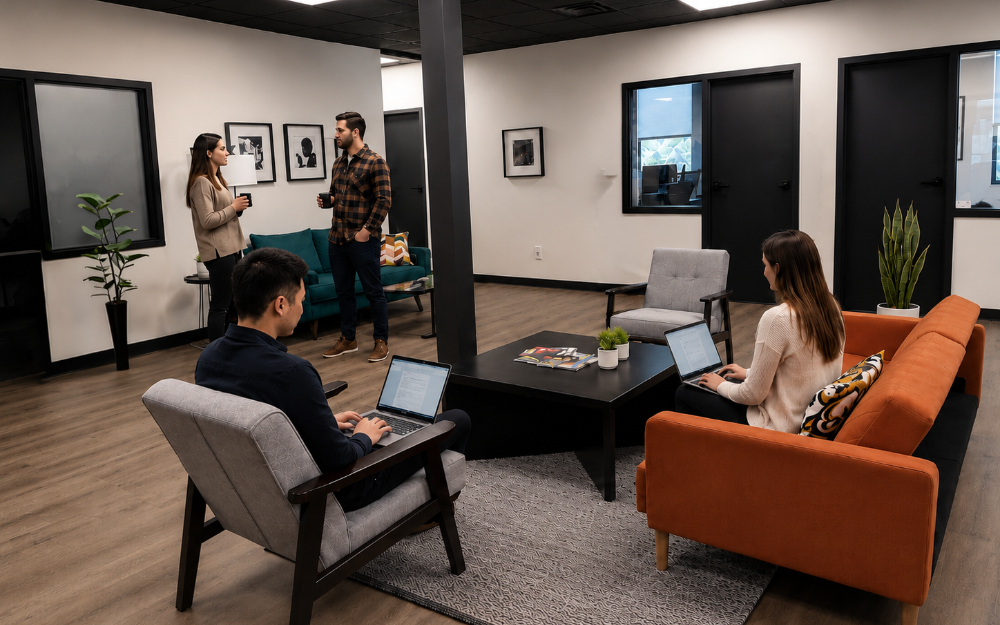
Remote work expanded flexibility, but it also introduced a persistent challenge: professional isolation. Employees working from home often experience reduced connection to colleagues, a weaker sense of belonging, and difficulty maintaining consistent motivation. These issues go beyond personal well-being. They directly affect retention, as disengagement increases the likelihood of employee turnover. Hybrid work and employee retention are closely tied because isolation is one of the primary reasons hybrid workers disengage. Coworking counters this by reintroducing social and professional interaction without requiring a full return to the office. Research shows that 89% of coworking members report higher happiness, along with measurable improvements in focus, productivity, and confidence. For businesses managing distributed teams, offering flexible workspace for remote workers preserves autonomy while reducing the isolation that drives turnover.
Creates an Environment That Supports Professional Identity
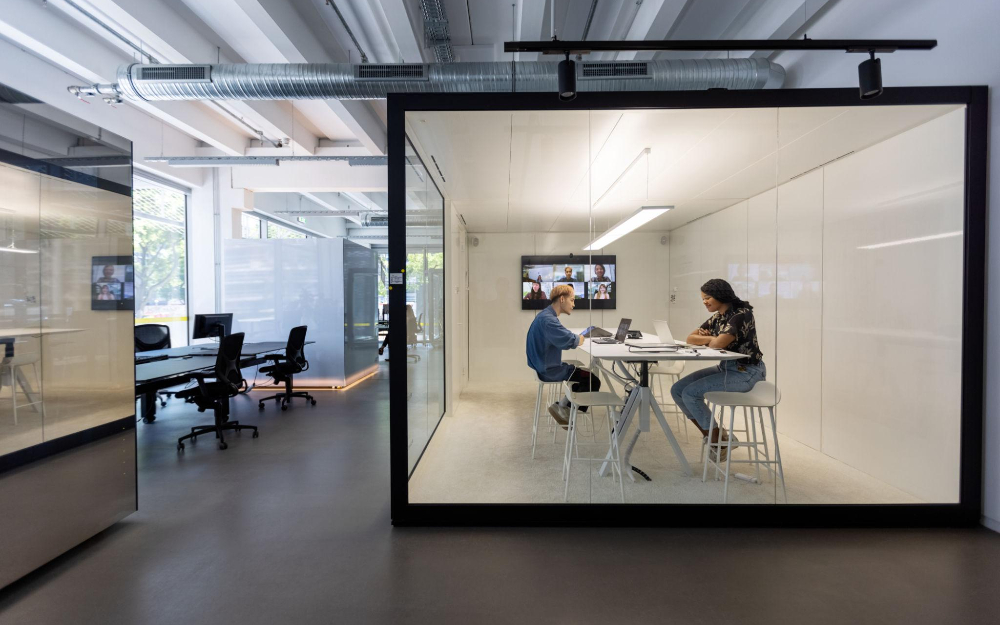
Professional identity, the sense that a work environment reflects the importance of one’s work, is often overlooked in retention discussions. Home offices and informal settings rarely provide this consistently, and over time, the lack of a clear professional boundary can contribute to burnout and reduced commitment. Coworking spaces address this directly by offering structured, purpose-built environments that reinforce the value of the work being done. Research shows that 68% of members feel more focused and 64% improve their ability to meet deadlines when working from a coworking environment. Boutique spaces like Brandnook in Indianapolis offer this balance through professionally designed workspaces paired with flexible office options for professionals who do not require a long-term lease commitment.
Reinforces Structure and Routine
Flexibility without structure can lead to inconsistent ways of doing work. Many remote employees struggle with blurred schedules, irregular work patterns, and difficulty maintaining clear boundaries between professional and personal time. Over time, this lack of routine can reduce productivity, increase stress, and weaken overall engagement, thereby increasing turnover risk. Coworking helps reintroduce structure by providing a consistent, dedicated place to work without removing the autonomy employees value. Having access to a professional environment encourages more defined work habits, clearer separation of responsibilities, and greater day-to-day stability. This balance is a key component of any effective remote work employee engagement strategy, and it supports long-term retention by reducing the friction that erodes commitment over time.
Supports Autonomy While Providing Optionality
Employee expectations have shifted toward greater control over how and where work happens. Removing that autonomy often leads to dissatisfaction, but offering flexible work options for employees without adequate support can leave people without the resources they need to perform effectively. This tension is a key driver of disengagement in many hybrid and remote models. Coworking resolves this by enabling employees to choose their work environment based on daily needs while maintaining access to professional infrastructure. Whether working from home, a shared workspace, or a private office, employees can adjust their setting without sacrificing productivity. This combination of autonomy and optionality creates a more adaptable and supportive work experience, increasing the likelihood that employees remain engaged and committed over the long term.
The Retention Case for Startups and Growing Businesses
For startups and growing companies, retention is not just a culture issue. It is a resource constraint. Competing for talent without the infrastructure, stability signals, or workplace experience of larger organizations creates a structural disadvantage that can influence both hiring and long-term employee commitment. Coworking spaces for small businesses offer a practical way to close that gap without taking on the overhead of a traditional office.
Scaling Workspace Without Sacrificing Talent
Early-stage companies often lack a centralized office or established workplace environment, which can affect how employees perceive stability and professionalism. While flexibility is attractive, the absence of a structured workspace can create uncertainty about where and how work is supposed to take place. Coworking offers a way to address this without requiring long-term leases or significant capital investment. Teams gain access to professional environments, meeting spaces, and consistent work settings, while the business maintains the flexibility needed to scale. This allows startups to offer a more comprehensive work experience without overextending financially, thereby supporting both the attraction and retention of key talent.
Signaling Stability and Investment in Employees
Retention is influenced not only by compensation, but also by the signals employers send about the quality of the working experience they provide. Offering access to a professional workspace communicates that the organization is intentional about creating a structured, supportive environment where employees can perform effectively. This becomes especially important in flexible work models, where employee engagement and retention are closely tied to day-to-day work conditions. Research consistently shows that higher engagement is strongly associated with lower turnover, and workspace is a key contributor to that engagement. By shaping focus, routine, and overall job satisfaction, the work environment directly influences whether employees remain committed to the organization over time.
Avoiding the Hidden Costs of Workspace Misalignment
Understanding the costs of employee turnover for businesses is critical to making the right investment decisions. Recruiting, onboarding, and lost productivity during transitions can place a disproportionate burden on smaller organizations where each role has a larger operational impact. Research from Gallup indicates that highly engaged teams experience 51% lower turnover and 23% higher profitability compared to disengaged teams. When workspace limitations contribute to disengagement, the resulting turnover becomes a preventable cost rather than an unavoidable one. Providing flexible workspace access is a relatively low-cost intervention that helps reduce that risk while preserving the financial agility that growing businesses depend on.
Coworking as a Strategic Benefit for Corporate Teams
For larger organizations, coworking serves a different but equally strategic role. As workforces become more geographically distributed, companies are using coworking spaces as satellite offices and hybrid work hubs to support retention across multiple markets. Instead of requiring long commutes to a central headquarters or leaving employees to work in isolation, organizations are offering professional workspace access as a distributed benefit. This reflects a broader shift in how workspace decisions are being made at the corporate level. Companies are increasingly expanding their use of flexible and coworking spaces, with talent attraction and retention cited as key drivers behind those decisions. Workspace is no longer evaluated solely on real estate cost. It is being assessed based on its impact on employee experience and workplace satisfaction, as well as its contribution to long-term workforce stability. A well-designed, supportive work environment, whether centralized or distributed, plays a critical role in employee satisfaction. It enables focus, reduces stress, and reinforces a sense of stability and belonging. For corporate teams managing employees across multiple locations, coworking provides a scalable and consistent way to deliver that experience, making it a practical tool for strengthening retention organization-wide.
Conclusion
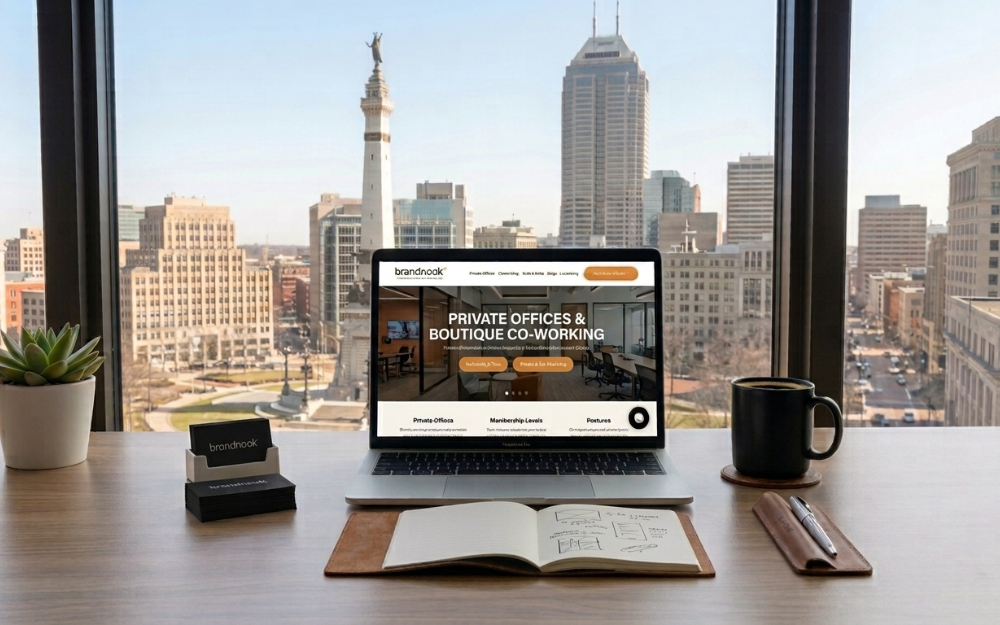
While the specifics may vary by organization, the core relationship is straightforward. Retention is driven by engagement, and the work environment heavily influences engagement. Because that environment is largely within an employer’s control, the workspace becomes a strategic lever rather than a passive cost. Businesses that recognize this connection can address employee turnover by making intentional decisions about how and where work happens. The most effective approach is not to mandate coworking, but to offer it as a meaningful option. Employees who choose a professional workspace that supports focus, connection, and clear boundaries are more likely to remain satisfied and committed than those dealing with isolation or rigid office expectations. Providing that choice, backed by a high-quality workspace solution, signals a clear investment in employee experience and translates into stronger retention outcomes. For businesses seeking a coworking space in Indianapolis, Brandnook offers a practical entry point with a free three-day pass, flexible membership plans, and thoughtfully designed workspaces that support both daily productivity and long-term employee well-being.